
NaturAfrica Project sets to Advance Biodiversity and Green Economic Opportunities across Nyungwe-Kibira Landscape
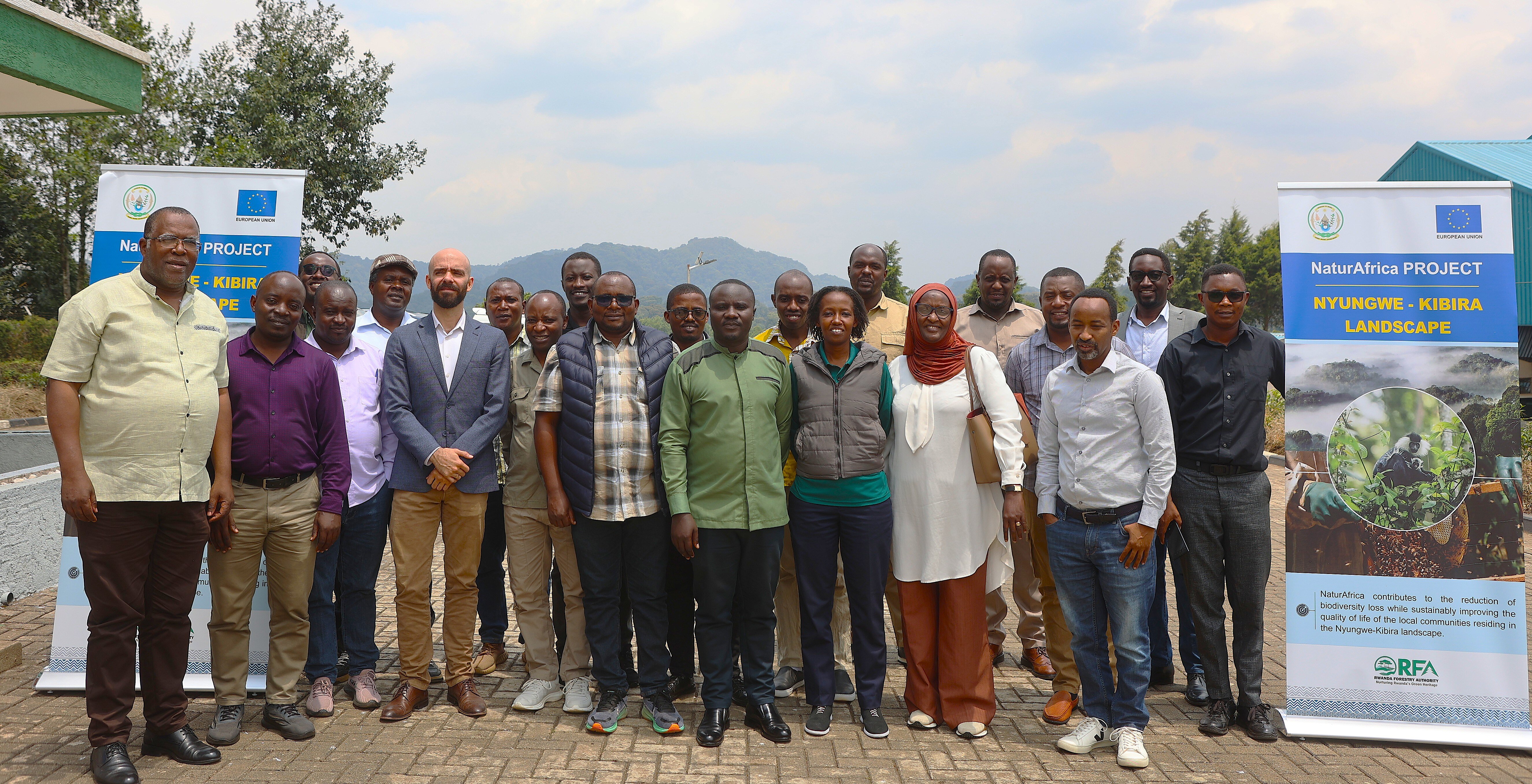
From 10 to 11 September 2026, Representatives from government institutions, district authorities, civil society organizations, private sector actors, and development partners convened in Gisakura for the first Multi-Stakeholder Governance Framework meeting of the NaturAfrica Project funded by the European Union.
Participants included the Rwanda Forestry Authority, Nyungwe Management Company (NMC), National Land Authority (NLA), Rwanda Mountain Tea, Kitabi College, district representatives from Nyamagabe, Nyaruguru, Nyamasheke, and Rusizi, alongside One Acre Fund, World Resources Institute (WRI), UFC Ltd, and the EU delegation.
Discussions centered on advancing biodiversity conservation, ecosystem restoration, and sustainable livelihood opportunities across the Nyungwe landscape. A key focus was the promotion of agroforestry, particularly through integrating indigenous tree species into tea plantations. Stakeholders explored ways to strengthen native tree production and dissemination, enhancing ecosystem resilience while generating economic benefits for surrounding communities.
The two-day mission concluded with field visits to the Nyungwe Management Company facilities in Gisakura and Kitabi College, where partners observed ongoing efforts in ecosystem restoration, research, and community engagement. These exchanges highlighted opportunities to deepen collaboration and foster knowledge sharing among conservation, research, private sector, and development actors.
Supported by the European Union in Rwanda, the NaturAfrica Initiative aims to conserve and restore biodiversity while promoting green economic opportunities for communities living in and around the Nyungwe-Kibira landscape. By fostering direct knowledge sharing among conservationists, researchers, private sector actors, and development leaders, the project seeks to establish integrated, long-term solutions that support both local populations and natural ecosystems.